
A driveway can look merely weathered, yet moss and algae may also make it slippery, while oil stains and grime detract from a home’s entrance. Professional driveway cleaning in Moreton-in-Marsh can help remove this build-up and improve the surface’s appearance, but the method needs to suit its material and the type of staining.
It’s understandable to want a cleaner-looking driveway without risking damage to its paving or finish. This guide explains how professional cleaning tackles moss, algae, oil marks and grime, why surface condition matters, and what to expect. A suitable approach removes surface dirt while helping to avoid unnecessary wear.
Key Takeaways
- Learn how moss, algae, oil marks and everyday grime affect a driveway, and why different stains may need different treatment.
- See what a professional assesses before cleaning, including the surface material, its condition and the type of build-up.
- Understand why choosing a method suited to the driveway helps remove dirt while reducing the risk of surface damage.
- Find out when specialist cleaning expertise can help restore the appearance of brick and stone surfaces.
Moss, algae, oil stains and grime removal
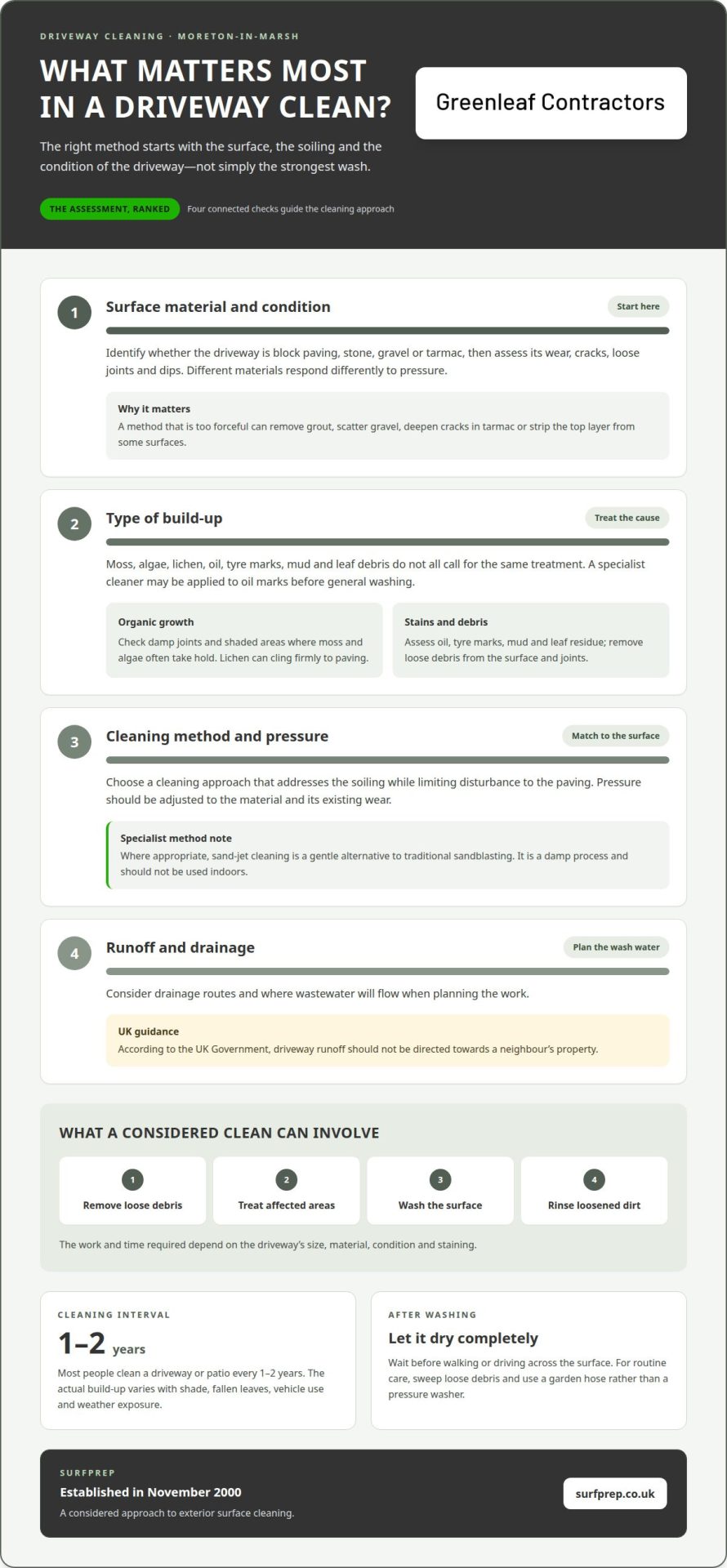
Driveways collect different types of soiling, so effective cleaning starts by identifying what has accumulated and what the surface can withstand. Moss, algae, lichen, oil, tyre marks and leaf debris each call for a considered approach.
Moss and Algae Removal
Moss and algae often take hold in damp joints and shaded areas, while lichen can cling firmly to paving. Their growth can make a driveway slippery, particularly along the route from a parked car to the entrance. A professional assesses where growth is concentrated and whether the surface is block paving, stone or tarmac before selecting a method.
Removing visible growth and weathering can improve the driveway’s appearance, but weeds in joints may need separate attention. Clearing organic debris from the surface and joints removes material that would otherwise remain between the paving.
Oil Stain and Grime Removal
Oil marks need targeted treatment: a specialised cleaner may be applied before general washing. Surface grime and absorbed oil stains present different cleaning challenges. Tyre marks, mud and leaf residue can also cause uneven discolouration, so affected areas are assessed before the full surface is cleaned.
Cleaning pressure must suit the material. Excessive jet force can remove grout, scatter gravel, deepen cracks in tarmac or strip the top layer from some surfaces.
Controlling weeds, moss and algae also means removing build-up from the joints, rather than simply rinsing across the top. A suitable treatment can address growth while limiting disturbance to the paving. The right choice depends on the driveway’s condition and construction.
Where appropriate, the sand-jet cleaning process offers a gentle alternative to traditional sandblasting. It is a damp process, so it should not be used indoors. For an exterior driveway, the key consideration remains matching the cleaning method to its material and existing wear.
Why should I get my driveway cleaned?
A clean driveway can make the route from a parked car to the entrance easier to use. Fallen leaves, damp patches and organic build-up can leave paving slippery, especially in shaded areas. Regular exterior cleaning removes surface debris and helps reveal cracks, loose joints or other wear that needs attention.
Before cleaning, a professional assesses the driveway material, its condition and the type of soiling. Block paving, stone, gravel and tarmac respond differently to pressure, so the method needs to suit the surface. Excessive pressure, for example, can scatter gravel, remove grout between paving or deepen cracks in tarmac. The assessment also identifies dips, damage and drainage routes that could affect the work.
Wastewater needs consideration too. According to the UK Government, driveway runoff should not be directed towards a neighbour’s property. Runoff direction is a practical factor when planning cleaning and handling wash water.
How often is professional cleaning useful? Most people clean a driveway or patio every 1 – 2 years. The actual build-up depends on shade, fallen leaves, vehicle use and exposure to weather. A driveway beneath trees, for instance, may collect leaf debris more quickly than an open, sunny surface.
Cleaning also reveals the surface more clearly, helping you make maintenance decisions based on its actual condition. A professional can distinguish staining from material wear and adjust the pressure accordingly. This matters on older paving, where an aggressive approach could worsen existing damage instead of improving its appearance.
Driveway cleaning in Moreton-in-Marsh
For driveway cleaning in Moreton, the right washing method depends on the material and its condition. A careful assessment helps avoid damage while addressing the specific build-up.
When choosing a driveway cleaner in Moreton, look for an approach that considers paving type, wear and staining. Jet washing can remove grout, scatter gravel, deepen cracks in tarmac or strip some surfaces if the pressure is unsuitable.
Reviews can help you understand customers’ experiences, but consider them alongside the cleaning method and work described. A review about block paving, for example, may not reflect the care needed for a different surface.
A professional clean can involve removing loose debris, treating affected areas, washing the surface and rinsing away loosened dirt. The work and time required depend on the driveway’s size, material, condition and staining.
After washing, let the driveway dry completely before anyone walks or drives across it. Between professional cleans, sweeping helps limit loose debris. For rinsing, use a garden hose rather than a pressure washer; harsh chemicals and abrasive cleaners can damage the surface.
To discuss your cleaning requirements, get in touch.
The company states its driveway cleaners in Moreton-in-Marsh are fully trained in driveway cleaning and pressure washing. These average figures may help when considering which type of service is relevant to the work you need.
After cleaning, let the surface dry completely before anyone walks or drives on it. For routine care, rinse the driveway with a garden hose rather than a pressure washer, and sweep regularly to remove loose debris and prevent build-up.
Surfprep
Established in November 2000, Surfprep helps homeowners choose suitable cleaning approaches for exterior surfaces. Its work includes brick and stone cleaning, plus wooden beam cleaning. For appropriate surfaces, superheated steam cleaning uses a Thermatech machine, with the material and its condition guiding the method.
Turn to Surfprep for a considered approach to cleaning built surfaces, rather than assuming one method suits every material. Brick and stone, for example, need different handling, and the surface condition influences the choice of process.
For guidance on your cleaning requirements, contact Surfprep.
Take the next step towards a cleaner driveway
For driveway cleaning in Moreton, a useful next step is to describe the surface and areas needing attention to Surfprep. Mention whether it is block paving, stone or tarmac, and note any visible wear or stubborn staining. These details provide a practical starting point without assuming one cleaning method suits every driveway.
Surfprep also cleans brick, stone and wooden beams, so the approach can be considered across different surfaces around your property. Each material has its own requirements, making a clear description of the work helpful from the outset.
If you’re ready to discuss your driveway, contact Surfprep about driveway cleaning. A straightforward conversation can help you decide on a suitable next step for your property.
Frequently Asked Questions
Why not jet wash your driveway?
Jet washing isn’t automatically unsuitable, but it can be too forceful for a fragile or previously repaired surface. A loose paving edge or weakened joint, for example, may be disturbed during cleaning. A professional considers the driveway’s material and condition before choosing a method, rather than treating every surface alike. Where pressure washing presents too much risk, a gentler approach may be more appropriate.
Which professional cleaning methods are suitable for block paving, concrete and resin driveways?
There isn’t one method that suits every block-paved, concrete or resin driveway. The cleaner needs to consider the surface’s condition, the type of soiling and how firmly its components are bonded. A professional can then select an appropriate approach and adapt it to the material. Resin surfaces need particular care, since the finish and condition influence how cleaning should be carried out.
What are the risks of pressure washing a driveway, and how can a professional prevent damage?
Excessive pressure can loosen block paving joints, mark vulnerable finishes or worsen existing wear. The risk is greater around damaged edges and areas where the surface has already deteriorated. A professional assesses these points first, then selects a method suited to the material and condition. This helps limit unnecessary force and focus on the soiling that needs treatment.
Driveway cleaning reviews and ratings in Moreton
Moreton driveway and patio cleaners have an average rating of 10 out of 10, based on 188 customer reviews.
