
Blast cleaning is not one-size-fits-all. Industrial surface preparation in Leeds uses a controlled stream of abrasive media, sometimes with water, to remove coatings, contamination or surface build-up and prepare the material for its next treatment. The right method depends on the substrate, its condition and whether the work is indoors or outdoors.
A clean, sound surface is essential, but a method suited to robust steelwork may be too aggressive for brick, stone or timber. This guide explains what preparation involves, how blast cleaning works and how common industrial cleaning methods differ. It also covers dry grit blasting, damp Sand Jet cleaning and other approaches, so you can understand the practical options before planning a project.
Key Takeaways
- Understand why removing dirt, loose coatings and contamination helps prepare a surface for industrial coatings.
- See how washing, scraping and abrasive blasting differ, and what affects the choice of method.
- Learn why the surface material and whether work is indoors or outdoors matter when selecting a cleaning process.
- Find out how Surfprep’s cleaning services can help with brick, stone and wooden beams, and when superheated steam may be suitable.
What is Surface Preparation?
Surface preparation removes unwanted material and creates a suitable base for coatings. On steel, the method must match the coating specification and the condition of the surface.
Preparing steel for industrial coatings
Preparation starts by removing dust, dirt and loose or peeling paint, using hand or power-tool scraping where suitable. SSPC-SP 2 identifies hand-tool cleaning, while SSPC-SP 3 identifies power-tool cleaning. Abrasive blasting can remove old coatings and create a rough profile that helps coatings adhere. The required finish depends on the coating and its intended service conditions. For example, steel exposed to constant water contact may need more preparation.
Functional coatings can also protect 3D-printed components. Their geometry and material influence how the surface is prepared, so the method should avoid damaging fine details whilst creating a clean base for the coating.
Removing previous coatings and contaminants
Preparation may involve washing, scraping, power washing, abrasive blasting or chemical treatment. Chemical removers soften paint before manual or mechanical removal. SSPC-SP 7 describes brush-off blast cleaning, and SSPC-SP 5 describes media blasting to white metal. These designations describe different approaches, not a universal requirement for every steel project.
Soluble salts can attract moisture and weaken coating adhesion, potentially damaging the coating and the steel beneath it. Soluble salt contamination may need specific attention during surface preparation. A preparation plan must address contamination as well as visible paint, dirt and debris.
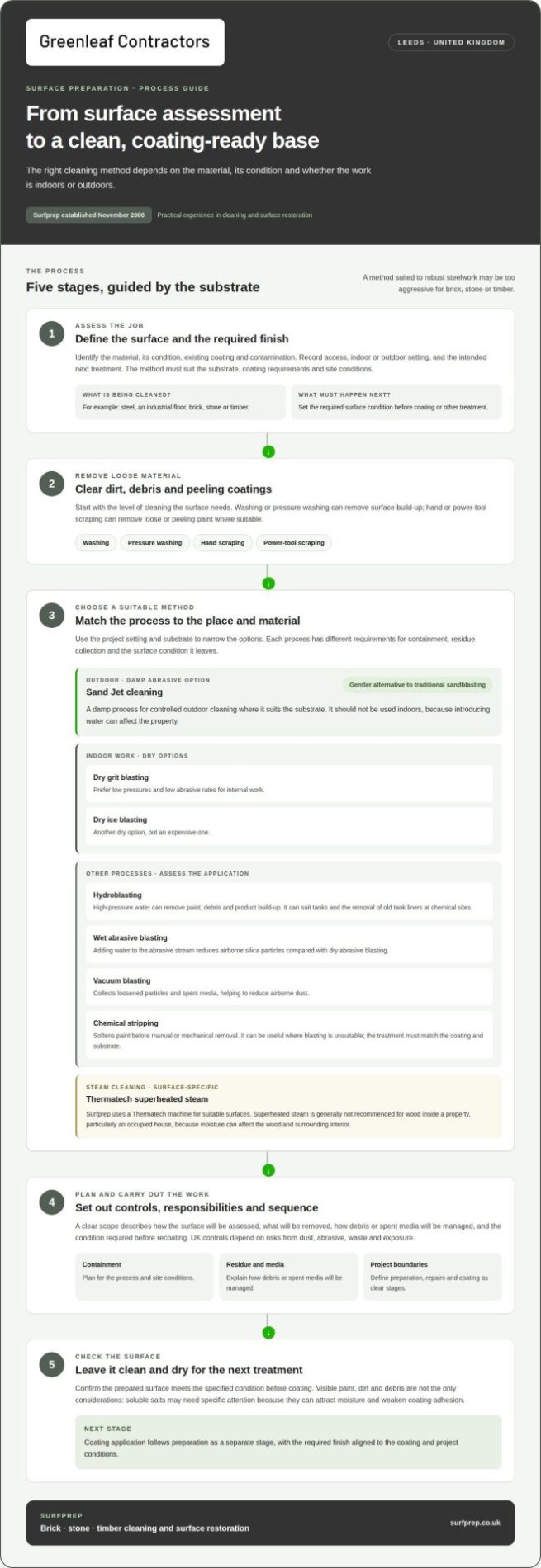
For an industrial floor or steel surface, first assess the substrate, then remove dirt and loose coatings. Prepare the surface using the specified method, and leave it clean and dry for coating. The method should suit the substrate, coating specification and site conditions. UK controls depend on risks from dust, abrasive, waste and exposure.
The scope should specify the surface area, existing coating, contamination, access and required preparation method. Assessment and preparation can be included, while repairs and coating application are separate stages that should be defined clearly.
Cleaning methods for industrial surfaces
For industrial floors and steel in Leeds, methods include washing, scraping, abrasive blasting and chemical treatment. The choice depends on the material, existing coating and required finish. A floor with surface build-up may need washing or pressure washing, while firmly bonded coatings on steel may call for abrasive blasting.
Hydroblasting uses high-pressure water to remove paint, debris and product build-up. It can be suitable for tanks and for removing old tank liners at chemical sites. Wet abrasive blasting adds water to the abrasive stream, reducing airborne silica particles compared with dry abrasive blasting. Vacuum blasting collects loosened particles and spent media, helping to reduce airborne dust.
For controlled cleaning outdoors, a sand jet is a damp, gentle alternative to traditional sandblasting. It shouldn’t be used indoors, where introducing water can affect the property. Internal work is better suited to dry grit blasting at low pressure and with a low abrasive rate. Dry ice blasting is another dry option, but it is expensive.
Chemical stripping softens paint before manual or mechanical removal. It can be useful where blasting is unsuitable, but the treatment must match the coating and substrate. Automated blasting can use compressed air to remove debris or old coatings. Each process has different requirements for containment, residue collection and surface condition.
For exterior cleaning where a damp abrasive process suits the substrate, sand jet cleaning is one option. Indoor restrictions and the need to keep the surface dry can point towards a different method.
Which Leeds companies provide industrial surface preparation?
In Leeds, industrial surface preparation is available from specialist contractors and broader industrial maintenance firms. Capabilities vary: some focus on steelwork and abrasive blasting, while others handle floors, buildings or coating removal. Match the stated work to the substrate and finish your project requires.
Start by setting out the project scope. A factory floor with worn paint needs a different plan from a steel tank with old lining. Specify the surface, existing coating, contamination, access conditions and intended next treatment. This gives the team a clear basis for planning the method and identifying practical constraints.
Compare proposals by looking for a clear sequence of work, not just a method name. The scope should explain how the surface will be assessed, what will be removed, how debris or spent media will be managed, and what condition is required before recoating. For example, a blasting proposal should distinguish steel preparation from cleaning brickwork.
Look for relevant experience with similar materials and settings, such as internal steelwork or an exposed industrial floor. Check that the proposed process suits indoor or outdoor conditions and that the expected finish aligns with the coating manufacturer’s requirements. A method chosen only for speed may damage the substrate or leave contamination behind.
Surface preparation, repairs and coating application can be separate project stages. Define the boundaries clearly in the written scope, including who handles each stage. To discuss industrial surface preparation in Leeds, send Surfprep your project requirements.
Surfprep: Industrial Surface Preparation
Established in November 2000, Surfprep brings long-standing practical experience to cleaning and surface restoration. Its work includes brick cleaning, stone cleaning and wooden beam cleaning, with superheated steam cleaning using a Thermatech machine for suitable surfaces.
Each material needs an appropriate approach. Superheated steam is generally unsuitable for timber inside a property, particularly an occupied house, because moisture can affect the wood and surrounding interior. The material and setting guide the choice of method.
For cleaning work on brick, stone or timber, contact Surfprep to discuss your project.
Plan the next stage of your surface project
Before work begins, define what the surface needs to be ready for next. A clear scope links the preparation method to the intended finish, site conditions and material. For industrial surface preparation in Leeds, these details provide a practical starting point for planning.
Surfprep cleans brick, stone and wooden beams. Share the surface type, its current condition and its location to start a practical discussion about your project.
Contact Surfprep about your surfaces to discuss the next step and move towards a clear plan.
Frequently Asked Questions
What Is Blast Cleaning?
Blast cleaning propels abrasive material against a surface to remove unwanted coatings or deposits. The impact also changes the surface texture, which can help prepare it for a later treatment. For example, abrasive blasting can strip old paint from steelwork, while a gentler approach may be needed for a delicate substrate. The media and force must suit the material.
Why Is A Clean Surface Profile Important?
A clean, suitably textured profile gives a coating a better surface to grip. Smooth areas, remaining paint or embedded dirt can interfere with adhesion and create weak spots. The goal is not simply to make the surface look clean: preparation must match the coating requirements. An excessively rough or uneven finish can also affect the result.
What industrial surface preparation services are available in Leeds?
In Leeds, Surfprep provides industrial surface preparation and graffiti removal, alongside brick, stone and wooden beam cleaning. Superheated steam cleaning is also available for suitable surfaces. Surfprep works in Leeds, York, Hull, Bradford, Nottingham, Manchester, Derby, Lincoln, Newcastle, Durham, Scarborough and Beverley. The right service depends on the material and the work required.
How do shot blasting, grinding and chemical stripping compare for industrial surfaces?
Shot blasting propels abrasive media at a surface and suits robust materials that need broad coating removal. Grinding uses a powered abrasive tool for targeted areas, edges or localised build-up. Chemical stripping softens a coating so it can be removed. The best fit depends on the substrate, coating, access and required finish; these methods are not interchangeable.
How long does industrial surface preparation take, and how can downtime be reduced?
Project duration depends on the area, coating condition, access and preparation method. Reduce disruption by defining the work zone and required finish before work starts, then planning access and follow-on coating stages in sequence. At an operating site, working through separate areas in a planned order can help keep unaffected workspaces available.
